
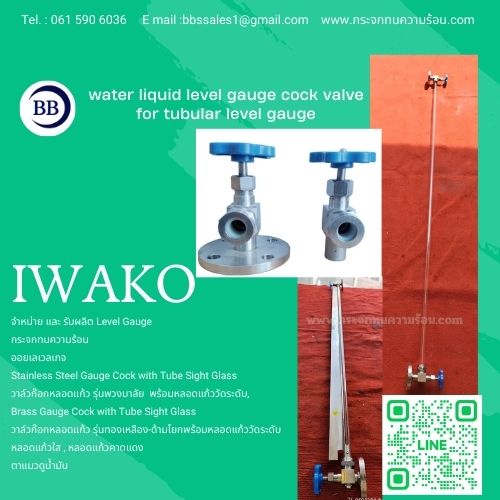
level gauge, sight glass
How do sight glass water level gauges differ from electronic sensor-based gauges?
ก.พ.
How do sight glass water level gauges differ from electronic sensor-based gauges?
Certainly! Sight glass water level gauges and electronic sensor-based gauges are both used to measure the level of liquids in tanks and vessels, but they operate on different principles and have distinct advantages and disadvantages. Here’s a detailed comparison:
Sight Glass Water Level Gauges:
Principle of Operation:
Sight glass gauges, also known as sight gauges or glass level gauges, operate on the principle of communicating vessels. They consist of a transparent tube or window that is connected to the tank or vessel, allowing for direct visual observation of the liquid level.
Advantages:
Direct Visualization: Provides an immediate and unobstructed view of the liquid level, allowing operators to see the liquid’s height, color, and clarity.
Simplicity: With no electronic components, they are straightforward to install and maintain.
Reliability: Due to their simple design, they are less prone to malfunctions.
Disadvantages:
Manual Reading: Requires personnel to visually inspect the level, which may not be ideal for remote or inaccessible locations.
Limited Integration: Cannot be easily integrated with automated control systems without additional equipment.
Safety Concerns: In high-pressure or high-temperature applications, there’s a risk of the glass breaking, though specialized glasses and protective shields are available for such scenarios.

Electronic Sensor-Based Gauges:
Principle of Operation:
Electronic sensor-based gauges use various technologies to detect the liquid level. Common methods include ultrasonic sensors, capacitive sensors, and pressure transducers.
Advantages:
Automation: Can be integrated with control systems for real-time monitoring and automated responses.
Remote Monitoring: Allows for readings to be taken and monitored from a distance, ideal for inaccessible or hazardous locations.
Accuracy: Typically offers high precision and can be calibrated for various liquids and conditions.
Safety: No risk of breakage like sight glasses, making them suitable for high-pressure and high-temperature applications.
Disadvantages:
Complexity: Requires power sources, and installation might be more complex than simple sight glasses.
Maintenance: Electronic components can malfunction and might require periodic maintenance or calibration.
Cost: Typically more expensive than basic sight glass gauges, especially for advanced sensor technologies.
Conclusion:
While both sight glass and electronic sensor-based gauges serve the purpose of measuring liquid levels, the choice between them depends on the specific application, budget, desired accuracy, and integration needs. In many industrial settings, a combination of both types might be used to ensure reliability and accuracy.
BB Steel Internationnal Supplier product “IWAKO” : Borosilicate Sight Glass ,Disc Sight Glass,Round Sight Glass, Tube Sigh Glass, Water Liquid Level Gauge , Water Level Gauge,Bronze water gauge valve,Gauge Valve with Sight Glass Tube ,Stainless Steel Liquid Level Gauges , Stainless Steel Gauge Cock,Water Gauge ,Gauge Valve with Sight Glass Cock, Oil Level Gauge , Bronze Water Gauges,Brass Oil Level Gauge , Flow Sight Glass.
Line ID : @bbsinter
Tel. 061 – 590 6036
www.bbsteelinternationnal.blogspot.com
FACEBOOK บีบี สตีล อินเตอร์เนชั่นแนล