
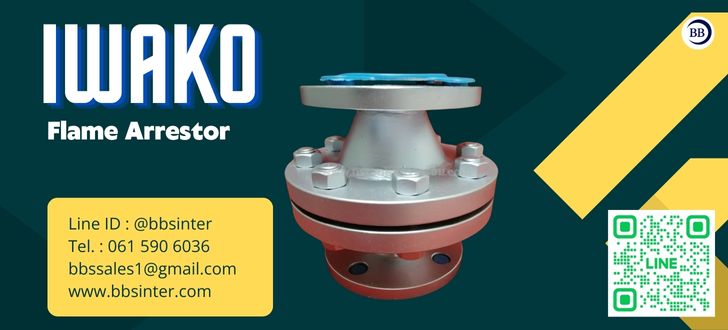
Flame Arrester
Principle behind a Flame Arrester
มิ.ย.
Principle behind a Flame Arrester
The basic principle behind a flame arrester is to create a barrier between the flammable material and the source of ignition. The barrier is typically made of a heat-resistant material, such as stainless steel , and is designed to allow the flow of material while preventing the passage of flames or sparks.
When a flame or spark passes through the arrester, it is cooled or extinguished by the barrier, preventing it from reaching the flammable material on the other side. This reduces the risk of a fire or explosion and helps to protect personnel and equipment from harm.
Flame arresters are commonly used in storage tanks, pipelines, and processing equipment that handle flammable liquids or gases. They are installed in the system at locations where the risk of explosion is high, such as at the outlet of a pressure relief valve, where flammable gases or vapors may be vented.
It is important to note that flame arresters should be regularly inspected and maintained to ensure that they are functioning properly. Any damage or deterioration of the arrester can compromise its effectiveness and increase the risk of an explosion.
Supplier Of Flame Arresters In Line Flame Arrester Cast steel with Expoxi ,In Line Flame Arrester Cast Iron with Expoxi ,In Line Flame Arrester Stainless Steel , End of Line Flame Arrester Cast steel with Expoxi , End of Line Flame Arrester Cast Iron with Expoxi , End of Line Flame Arrester Stainless Steel
Contact Us Today To Request Your Free, Non-Obligatory Quote.
Line ID : @bbsinter
Tel. 061-5906036