
level gauge
What is the difference between gauge and valve?
ก.พ.
What is the difference between gauge and valve?
What is the difference between gauge and valve? : Gauge vs. Valve: Unraveling the Distinctions in Industrial Liquid Level Measurement.
The intricacies of the industrial sector often bring terminology to the forefront that may appear synonymous or overlapping to the uninitiated. Two such terms in the realm of liquid level measurement are “gauge” and “valve”. While they operate within the same ecosystem and are frequently used in conjunction, their functions, designs, and purposes are distinctly different. Let’s dive deep into the differences between a gauge and a valve within the context of industrial liquid level measurement.
Understanding the Gauge
A gauge, in the industrial measurement context, usually refers to an instrument designed to measure and display quantities like pressure, temperature, or, as is our primary focus, liquid levels.
Key Characteristics of Gauges:
Display Mechanism: Most gauges come with a visual display, analog or digital, that showcases the measured value.
Sensitivity: Gauges are intricately designed to detect minute changes in the parameter they’re measuring.
Calibration: Over time, to maintain their accuracy, gauges may require recalibration to ensure they provide correct readings.

Understanding the Valve
A valve, on the other hand, is a device that regulates, directs, or controls the flow of a fluid (like liquids or gases) by opening, closing, or partially obstructing various passageways.
Key Characteristics of Valves:
Flow Control: The primary function of a valve is to control the flow rate, direction, or both.
Operational Mechanism: Valves can be operated manually, electronically, or pneumatically, depending on their design and purpose.
Sealing: Valves often come with sealing components to prevent unwanted leaks when in a closed or partially closed position.
Key Differences between Gauges and Valves:
Functionality: While gauges are predominantly measurement instruments, valves are control devices. A gauge provides data, while a valve acts on commands or specific conditions.
Design: Gauges are typically designed with sensitivity in mind, ensuring accurate readings. Valves, however, prioritize robustness and the ability to withstand various pressures and flow conditions.
Integration in Systems: In an industrial liquid level measurement setup, a gauge would be used to display the liquid level inside a tank or vessel. A valve, conversely, might be employed to control the intake or outflow of the liquid.
Maintenance: Gauges, due to their delicate measurement components, might require careful handling and regular calibration. Valves, being more about brute functionality, might necessitate checks for wear and tear, especially on their sealing components.
Conclusion
While both gauges and valves are integral to the industrial liquid level measurement landscape, they serve distinctly different roles. Recognizing these differences is crucial for anyone involved in system design, maintenance, or operations. An accurate gauge will ensure you have the data you need, while a reliable valve ensures that you have control over your processes – together, they form the backbone of efficient and safe industrial operations.
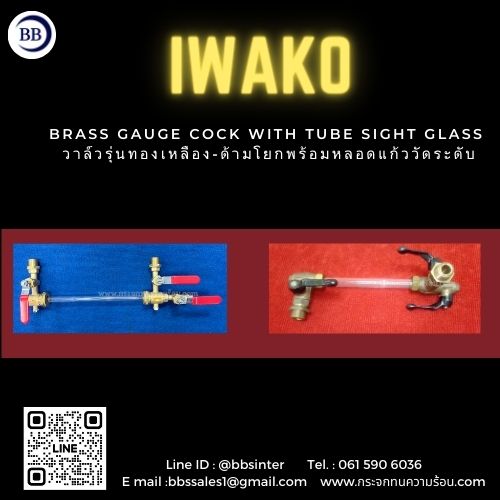
We are Suppliers brand “IWAKO”Water Sight Glass Level Gauge Cock Valve, Cock Valve , Water Level Gauge Cocks ,Glass Tube Level Gauge, Glass Tube Level Gaug , Borosilicate tube sight glass , Reflex glass level gauge, Transparent glass level gauge, Glass tubular level gauge.
Line ID : @bbsinter
Tel. 061 – 590 6036