
level gauge, sight glass
What is a level gauge and how does it work?
ม.ค.
What is a level gauge and how does it work?
In the vast landscape of industrial operations, monitoring and controlling the level of liquids in tanks and vessels is paramount. Enter the level gauge – a pivotal instrument that has revolutionized how industries measure liquid levels. But what exactly is a level gauge, and how does it function? Let’s dive deep into its intricacies.
What is a Level Gauge?
A level gauge, often simply termed a gauge, is a device designed to determine and display the level of liquid or, occasionally, solid materials within a container. Whether it’s a massive storage tank in a petrochemical plant or a small vessel in a brewery, level gauges provide invaluable data about the contents inside.
The Working Principle of Level Gauges
While the specific operational mechanism can vary based on the type of gauge, most level gauges function on a few foundational principles:
Communicating Vessels: The core principle behind many level gauges is that of communicating vessels. When a gauge is connected to a container, the liquid inside the gauge seeks equilibrium with the liquid in the container, resulting in a matching level.
Direct Visualization: Sight glass level gauges, a popular type, employ a transparent tube allowing operators to directly observe the liquid level.
Mechanical Indication: Float-based gauges utilize a float that moves with the liquid’s ebb and flow. This movement is then translated into a readable level through indicators or dials.
Electronic Sensing: Advanced electronic gauges harness sensors that detect liquid levels based on various methodologies, such as ultrasonic waves, capacitance, or differential pressure. These sensors relay data, which is then converted into a comprehensible display.

Why are Level Gauges Essential?
Safety: Overflows or critically low levels can pose safety hazards. Level gauges provide real-time data, preventing potential mishaps.
Operational Efficiency: For processes that rely on specific liquid quantities, gauges ensure that levels are maintained, guaranteeing consistent product quality.
Cost-Efficiency: By monitoring levels, industries can optimize storage, reduce wastage, and streamline operations.
Integration Capabilities: Modern gauges can be integrated with automated systems, enabling real-time monitoring and automated responses based on readings.
Conclusion
Level gauges, with their diverse designs and functionalities, have become an industrial mainstay. They stand as a testament to the importance of precision and safety in operations. As technology continues to advance, we can anticipate even more refined and versatile gauges, further enhancing the world of liquid level measurement.
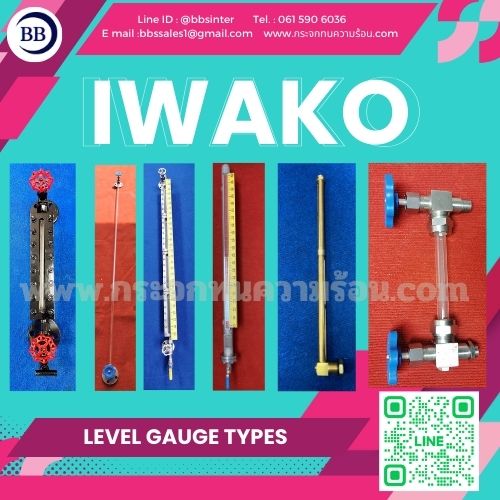
BB Steel Internationnal Supplier product “IWAKO” : Borosilicate Sight Glass ,Disc Sight Glass,Round Sight Glass, Tube Sigh Glass, Water Liquid Level Gauge , Water Level Gauge,Bronze water gauge valve,Gauge Valve with Sight Glass Tube ,Stainless Steel Liquid Level Gauges , Stainless Steel Gauge Cock,Water Gauge ,Gauge Valve with Sight Glass Cock, Oil Level Gauge , Bronze Water Gauges,Brass Oil Level Gauge , Flow Sight Glass.
Line ID : @bbsinter
Tel. 061 – 590 6036
www.bbsteelinternationnal.blogspot.com
FACEBOOK บีบี สตีล อินเตอร์เนชั่นแนล